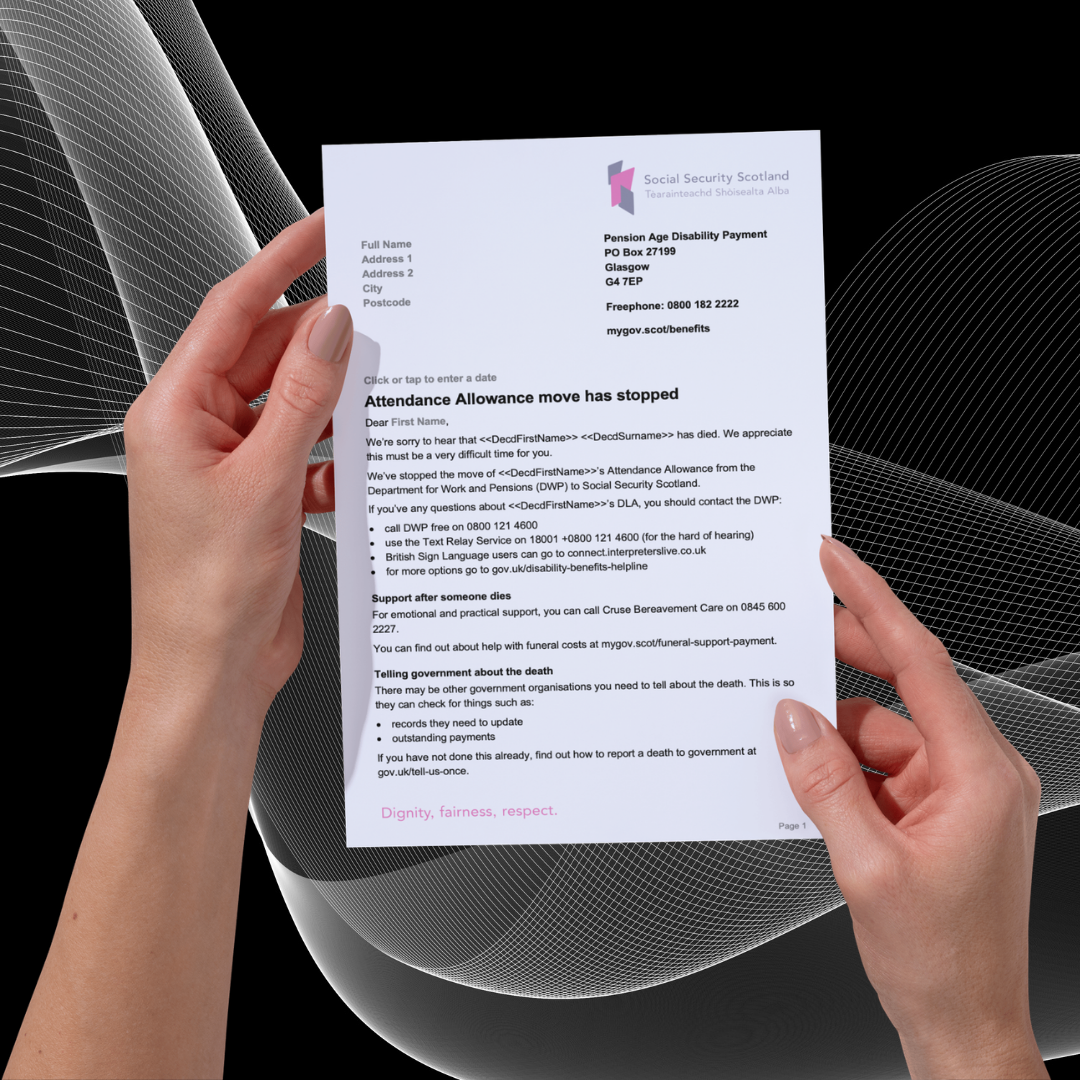
Overview
Turning policy-heavy decisions into clear next steps.
Redesigned Scottish Government benefit service letters to improve comprehension among claimants — particularly those in vulnerable situations — and reduce the effort required to understand what a letter meant and what to do next.
The Problem
People didn't know what their benefit letter meant — or what to do next.
Benefit decision letters were written from a legal and policy perspective — dense, passive, and full of jargon. For claimants already under financial stress, a letter they couldn't understand created anxiety, unnecessary calls to the service, and sometimes led people to miss deadlines or not exercise their right to appeal.
What I Did
Content audit & restructure
Audited existing letter templates across the benefit service, mapping each information component — decision, reason, next steps, rights, contact details. Restructured letters around user need, not policy order.
Plain English rewrite & testing
Rewrote letter content in plain English — active voice, short sentences, clear headings — while maintaining legal accuracy in close collaboration with policy teams. Tested comprehension with real claimants and iterated.
Personas
Designing for the people reading these letters.
I built personas around real claimants — their confidence with official communications, the channels they rely on, and what they need a letter to tell them. They kept the redesign anchored in comprehension and reassurance, not policy convenience.
“I just want to know what the decision means and what I need to do next.” — Sarah, 32 · Retail Assistant
Relies most on letters and phone. Reads a decision letter once and needs to immediately grasp the outcome and any action required — without decoding official language.
Motivations
- Understand the decision quickly
- Know if any action is required
- Feel confident she hasn't missed anything
- Access the support she's entitled to
Pain points
- Official language is difficult to understand
- Important information is buried in long paragraphs
- Unclear why a decision was made
- Anxiety about missing deadlines or next steps
“I often need someone to help me understand government letters.” — David, 67 · Retired
Leans heavily on letters, phone, and in-person advice. Low confidence with official communications, and often shares letters with a support worker to interpret them.
Motivations
- Understand what the decision means
- Find contact details quickly if he needs help
- Share information easily with a support worker
- Complete any required actions correctly
Pain points
- Low confidence with official communications
- Finds long documents overwhelming
- Struggles with complex terminology and acronyms
- Relies on others to interpret important information
Prioritisation
Aligning stakeholders on what to fix first.
With limited time and many possible changes, I ran an impact-versus-effort exercise with stakeholders to agree what to tackle first — making the case for the high-impact, low-effort changes that would help claimants fastest.
Quick Wins · do first
Move the decision outcome to the top of the letterMajor Projects
Redesign the entire letter template structureFill-ins
Update contact information formatting Improve spacing and typographyThankless Tasks · avoid
Large-scale content migration without redesignOutcome